
Archive for the ‘East Java History & Glorious’ Category

Health Museum - Surabaya

Health Museum - Surabaya

Health Museum of Dr. Adhyatma, MPH

In order to save and to maintan the nation’s cultural heritage, the Ministry of Health of Indonesia through the Center for Research and Technology Development and Health Services in Surabaya, initiated a health museum since 1990. The museum collects and displays health historical items since the earlier time until now. Formally on September 14, 2004, the Minister of Health inaugurated the museum and named “Health Museum of Dr. Adhyatma, MPH – MOH”.

In regard to these efforts, have also realized even more advanced age, more sophisticated technology, but the nation’s ancestors heritage, including the health culture can not simply left.

Therefore, the Health Museum, expected to become a medium of education or the health center learning for the public and the scientific community who care about health effort.

The purpose of this museum was built to save and preserve objects of historical value to the time of the health sector until now. Besides this museum also gives information to the today generations and future generations about health intricacies of the history, culture, science and so on.

This museum has equipped with a “special library” which collects and serves all library materials: books, magazines, recording tapes, video footage and others. Library materials allows for the deepening of cultural studies in health.

The collection is include all of historic objects in health services from various regions, race / ethnicity, religion / beliefs, etc; has realized in: the original object, object imitation, replica, photograph or image. While the exposure or exhibition technical in the museum is presented in a different room or a group show called ‘Sasana”, which is:

1. Sasana Adhyatma (Adhyatma Room)
This Sasana presents various collections of the late Dr. Adhyatma MPH when he served as Minister of Health in 1988 untill 1993. There is also a collection of inscriptions.

2. Sasana Kencana (Kencana Room)
In this room exhibited a variety of historical objects of decoration, badges of precious metal, a letter of appreciation and so on related health struggle. In the room was also presented the history and health profile of the museum pioneer.

3. Sasana Kespro (Reproduction Health Room)
Storing and displaying various items / equipment of reproduction health including; the health of mothers and children from different cultures or cultural, pregnancy health, childbirth and family planning.

4. Sasana Genetika (Genetics Room)
In this room and show the various genealogy lineage that is closely related to genetics of a dynasty, such as genealogy of various royal families in Indonesia.

5. Sasana Kesehatan Budaya (Culture Health Room)
Health efforts based on belief or supernatural, unseen world is a culture reality that had exist and developed since past time ago. An interesting phenomenon as well be a challenge for all of us to examine and uncover the mystery, so that can be utilized for our health, prosperity and humanity.

6. Sasana Fauna (Fauna Room)
We must remain alert to the animals around us. Various animals can be a mediator of disease (vector), but there are also some animals that merit as a medicine and so help us all.

7. Sasana Medik dan Non Medik (Medical And Non-Medical Room)
Various medical and non-medical health equipments are stored and displayed in this room. These objects are used by health institutions in the past times and become great historic services for our society health.

www.surabaya.eastjava.com

Navy Museum - Surabaya

Navy Museum - Surabaya

Navy Museum

Located in Krembangan Morokrembangan District of Surabaya and surroundings, Naval Academy (AAL) is to educate prospective Navy Officers and Educational Development Command Navy enlistee educational, non-commissioned officer and officer education. The complex is better known as “Earth Moro” Surabaya.

The museum of the trip begins on September 19, 1969 by the name Sea Akabri museum which was inaugurated by Mrs R Mulyadi. In accordance with the original name only for the Navy as a Midshipman Akabri studying media history. Along with the progress the museum was renamed the Navy Museum on July 10, 1973. Finally, on October 6, 1979 the name changed again to MuseumTNI-AL Crana Loka Jala.

This museum tells the history of development and struggle during the Navy Physical Revolution, a collection of guns stored warships, aircraft, helicopters, PT 76 Amphibious Tank, field artillery and air defense, firearms ranging from pistols to automatic long-barrel that is not ancient can be found elsewhere. Miniature warship KRI compact with mirror frame. Miniature is made in the original fleet that used to strengthen the Republic of Indonesia.

Collection mainstay of cannon from the warship “De Zeven Provincien” type Destroyers. The story of the struggle Indonesian sailors seized ships are owned by the Dutch East Indies on February 4, 1933. Corporal Kawilarang lead resistance and left for Surabaya to free your friends in arms, but paralyzed by the Dutch succeeded.

The most exciting ride of the visitors is the Planetarium, the simulations show the stars or heavenly bodies. Visitors invited to wander the universe to understand the concept of the universe. Dome-shaped roof of a half circle. All around the walls adorned with all the zodiac as Virgo, Sagittarius, Gemini.

There is also a replica tall ship KRI trainer Dewaruci, the original is still in operation today. The ship was used to train the “Cadets” another name Midshipman AAL and often make the voyage to the various countries and even between continents in a few months.

Navy Museum is the mirror in the field of military struggle Matra Sea. It is expected that future generations can know, understand and live the struggle of the heroes so they can continue lofty ideals became heir to the State Marine. “My ancestors sailors ….

Jalesveva Jayamahe

www.surabaya.eastjava.com

WR.Soepratman Museum - Surabaya

WR.Soepratman Museum - Surabaya

WR. Soepratman Museum:
( A Museum That Save The History of
The Author of Indonesia National Anthem )

Wage Rudolf Soepratman is the Great Hero of the author of Indonesia national anthem. Born on Monday, 9 March 1903 in Jatinegara Jakarta believe in Islam and not followed the political organization. His father named Senen, a sergeant in Battalion VIII. Mothered by his brother in-laws of WM Van Eldik (Sastromihardjo) he had learnt pluck guitar and fiddle violin.

In 1914, Soepratman follow Roekijem to Makassar. Over there, he sent to school and financed by Roekijem husband named Willem Van Eldik. Soepratman study Dutch language in night school during 3 years then continued it to Normaalschool. He go to an education school in Makasar and when he 20 years, he is lifted as a teacher in Angka 2 School. Two years after, he get Klein Ambtenaar certificate.

www.eastjava.com/tourism/surabaya/wr-soepratman-museum/When he live in Makassar, Supratman had studied music from his brother in-laws named Willem Van Eldik, so that he clever to played violin and then he can compose song. When living in Jakarta, once upon a time he read a composition in Timbul magazine. The composition writer invited the Indonesia music experts to create the national anthem.

In October 1928 in Jakarta, there was passed off a Youngster Congress. The congress had borne ‘Sumpah Pemuda’. At congress closing night, on 28 Octobers 1928, Supratman sound off his creation song instrumentally in front of the public participant. At that time is for the first time of Great Indonesia song is echoed publicly. All which presents is surprised to hear it. Swiftly the song had known among national movement. If the political organization performed a congress, hence Great Indonesia song is always warbled. The song is materialization of association desire to independence.

He ever built music group which stream jazz called Black and white until 1924. He went to Surabaya and Bandung become newspaper correspondence of "Kaoem Moeda".

By 28 Octobers 1928, performed a Second Youngster Congress with result of young man oath that confessed one fatherland, one nation, one Indonesians. In that congress had warbled by Great Indonesia song and accompanied by friction of WR Soepratman violin.

7th Augusts 1938, (Sunday) Indonesia Scout had sung Rising Indonesia song in NIROM Embong Malang Street Surabaya. Passed away in Mangga Street 21 Surabaya
The effect of create the Great Indonesia song, he always hunted by the side of Dutch Indies Police and caused fall sick in Surabaya. Because his last creation song "Matahari Terbit" in the early of 7 Augusts 1938, he is caught when he broadcasting the song with the guides in NIROM Embong Malang street, Surabaya and jailed in Kalisosok Surabaya, and then die in 17 Augusts 1938 on Wednesdays buried in Kapasan graveyard.

Some of his creation songs:
The Nationality of Great Indonesia (Indonesia Raya)
Bendera kita merah putih
Matahari Terbit
Ibu Kita Kartini
Mars Kepandoen Bangsa Indonesia

On 26 Junes 1958, The Government Regulation 44, had declared Indonesia Raya as Republic of Indonesia National Anthem
10 Novembers 1971 Appreciations of National Warrior
19 Junes 1974 Appreciations of Main Mahaputra Star

More info visit: www.surabaya.eastjava.com

Sadon Temple - Magetan

Sadon Temple - Magetan

Reog or Sadon Temple is one of an archeological heritage from the Airlangga kingdom which is located in Cepoko village, Panekan district, and northside of Magetan regency.

Visit Sadon Temple in Magetan and learn about its heritage story and archeological relief.

More info visit: www.magetan.eastjava.com

Brahu Temple - Mojokerto

Brahu Temple - Mojokerto

BRAHU Temple

Brahu temple is the biggest temple in Trowulan. Brahu is supposed come from “Wanaru” or “Warahu”, which is name of holly building that mentioned in a cooper inscription “Alasanta” that found in west side of this temple. Brahu temple is made of red bricks and plain without decoration. It is located in Jambu Menta sub-village, Bejijong village, Trowulan district, Mojokerto regency.

The temple that looks out on west is rectangle building with 22,5 m length, 18 m width, and 20 m height. Its building consist three part, which is foot, body and roof. Seen from its style, this temple is supposed to Buddha temple that built in 15 century. Based on Mpu Sendok inscription (861 Saka or 9 September 939 M), this temple is place to burn Kings Brawijaya death body (crematorium). But in some research, they never found any death body ash in the temple. The restoration of this temple is done in 1990 – 1995.

More info visit: www.mojokerto.eastjava.com

House Of Sampoerna - Surabaya

House Of Sampoerna - Surabaya

HOUSE OF SAMPOERNA

Situated in “old Surabaya”, this stately Dutch colonial style compound was built in 1858 and is now a preserved historical site.

Previously used as an orphanage managed by the Dutch, it was purchased in 1932 by Liem Seeng Tee, the founder of Sampoerna, with the intent of it being used as Sampoerna’s first major cigarette production facility.

This complex consisted of a wide central auditorium, two smaller buildings in east wing and occidental and some wide barns with one floor behind central auditorium. The buildings that stay in both auditorium wings is then turned into family house, whereas big barns looks like a warehouse exploited for tobacco and clove processing, to catch, stick it and packing, printing office and finished goods processor.

Today, the compound is still functioning as a production plant for Indonesia’s most prestigious cigarette, Dji Sam Soe. In commemoration of Sampoerna’s 90th anniversary in 2003, the central complex has been painstakingly restored and is now open to public.

The original central auditorium is now a museum and the east side has been transformed into a unique structure containing a café, a merchandise kiosk and an arts gallery. The building on the west side remains the official family residence.

Museum
House of Sampoerna (HoS) Museum offers a truly unique experience for visitors. From the story of the founding family to closely watching a real hand roll production facility and ending up with an unforgettable experience of rolling a stick of Dji Sam Soe cigarette. You can join 3,900 women in this plant, hand-rolling cigarettes using traditional equipment. They do it at a speed of more that 325 stick per hour.

Shop Museum in HoS offer is assorted souvenirs, such as; the miniature of stick equipment traditional cigarette, package, clove, books and shirt.

More info: www.surabaya.eastjava.com

Soekarnos Grave - Blitar

Soekarno's Grave - Blitar

One of the tourist attractions in Blitar municipality is the tomb of Soekarno, an Indonesian proclamation reader and the first President of the Republic of Indonesia. It is located at 60 Slamet Riyadi Street, Bendogerit village, Sunan wetan district, about 2 kilometers from Blitar city.

The architectural "Joglo" dominates the tomb. It is in East Javanese style and combined with Gateway of Bentar. Beside the main building formed cover grave house of âBung Karnoâ, this graveyard complx also completed with support building that is; Gapura Agung (The Great Gate), Mosque, and hall; which make the visitor feel comfortable to pilgrim in this location. There is also the complement building, consist of the grave manager house, public relax place, park area, and park. The impression is as great as the first president himself when he was still alive.

The tomb is visited by many pilgrims and opened for public. A lot of people come to visit at the time of memorial âKholâ (the day of the death) of the Indonesiaâs proclaim. The average of the visitorsâ is amount to 150,000 per year, including both domestic and foreign visitors.

The great name of Soekarno invites the tourists to have pilgrimage tour to this graveyard. They feel astonished with the great president Soekarno, so that they pray in this graveyard to ask the benediction.

More info visit: www.blitar.eastjava.com

Sumberawan Temple - Malang

Sumberawan Temple - Malang

Sumberawan Temple

Sumberawan Temple that located in the foothills of Mt Arjuna to the north east of Malang, is one of a Buddhist statue in East Java. Dating from about the end of 14th century or beginning of 15th century, this site has been identified with Kasurangganan, or ‘the garden of the heavenly nymphs’, which is mentioned in the Nagarakertagama as having been visited by King Hayam Wuruk of Majapahit in 1359.

Sumberawan temple is located about 1 kilometer of Singhasari temple gateway, which in Hindu style. To reach Sumberawan temple, the visitors should walk on a path between rice field and river through 500 meters of roadway of Sumberawan village. It surrounded by nature panorama and has natural water source. It said that the water of Sumberawan pool has great energy for health. Some visitors always take a bath in this pool. They don’t want to pass it.

The temple is in Buddhist style and formed a statue without any accessories. Temple’s body is rectangular and contain of two parts. The temple is one of beautiful temple in East Java, because of its location. Every ‘Waisak’ (Buddha Holiday), Sumberawan Temple is visited by many Buddhist to celebrate the life of the Buddha. They usually come in the evening and having meditation.

More info visit: www.malang.eastjava.com

Tegowangi Temple - Kediri

Tegowangi Temple - Kediri

Tegowangi Temple

Tegowangi temple is one of ancient temple in Kediri region. This temple has saved many stories about Kediri history. There are some reliefs on the temple wall that interest the tourists who like the historic tourism. The temple is stand in one complex and it looks like a rectangular form.

This temple is one historical tourism objects in Kediri regency. Find the historic value by visit this old temple.

More info visit: www.kediri.eastjava.com

Submarine Monument - Surabaya

Submarine Monument - Surabaya

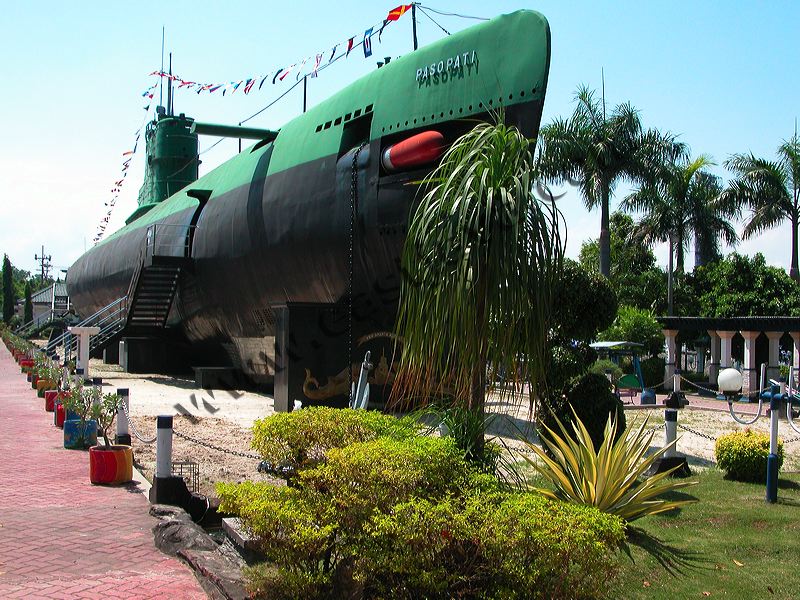
SUBMARINE MONUMENT SURABAYA
(SS type whiskey class submarine built in Vladivostok Russia in 1952)

As you continue on your journey, visit the Monkasel, the original KRI Pasopati 410 submarine next to the Surabaya Plaza shopping center. It is 76.6 meters long and 6.3 meters wide. It was moved from Ujung to this location on July 1st, 1995, after the museum was officially opened by Arief Kushariadi, the Naval Commander of the Republic of Indonesia on June 27, 1998.

KRI. Pasopati with 410 side number belongs to SS type whiskey class built in Vladivostok Russia in 1952. It has been with Indonesia Navy since 29 January 1962 and carried out dutief to destroy enemy line, to be surveillance and acts as silent raids. KRI. Pasopati bought ctivelly for independence and national supremacy in the past. It was the front line during Trikora Operation, gave psicological presure so that west Irian could be gain back and other important operation.

The following month, on July 5, 1998, it was opened to the public as a marine tourist destination. Boats and a diorama also complete the monument, which also functions as a museum. The visitors who want to travel by boat along the Kalimas River to view the monument can launch from ‘”Prestasi Park” behind the Grahadi Governor Mansion.

Monkasel is equipped with a multimedia building which presents a program in recognition of the Indonesian Navy. Monkasel is open from Monday through Friday from 0830-2200 WIB. To receive more information please contact 031-5490410. The following facilities are provided: parking, a canteen, a stage, and an amusement area for children. It is easily reached by public transportation.

More info visit: www.surabaya.eastjava.com